Love handles sit over the hip bone, where the waist meets the hip. They are dense, they resist training more stubbornly than abdominal fat, and they are the reason a flat stomach can still photograph badly in a fitted top. Treating them is less about volume than about restoring the inward curve between the ribs and the pelvis.
Most patients do best when the flanks are treated together with the abdomen and bra line, which is one three-hour operation under sedation. If your goal is the waist-to-hip shape rather than flank volume, our signature plan adds hip grafting and saddle work in the same session.
What is love handle liposuction?
Love handle liposuction removes the fat that sits over the hip bone at the side of the waist, through cuts placed in the pelvic crease and near the tailbone.
The flank is what makes a waist read as a curve or as a straight column, which is why it is usually treated together with the abdomen rather than on its own.
Why are love handles treated with the abdomen and back?
- A curve is created by the difference between waist and hip, so both sides of that transition must be planned
- Flank fat removed in isolation can leave a visible step where the untreated bra line begins
- Flank removed fat is dense, high-quality donor fat for hip grafting in the same operation
- One incision set at the pelvic crease and tailbone serves flank, abdomen and back together
Am I a good candidate for love handle liposuction?
Your weight is stable, the roll can be pinched between your fingers rather than sitting rigidly behind the abdominal wall, and the skin over it retracts. Men frequently present with flank fat alone even at a normal body weight, and respond well.
A firm, non-pinchable abdomen with a wide waist usually indicates deep belly fat, which suction cannot treat. We will tell you at the consultation instead of quoting an operation that cannot deliver the change you want.
Which areas does love handle liposuction treat?
- Flank roll above the hip bone, front to back
- Waist at the level of the lowest rib, where the curve should be deepest
- Upper hip, blended so no step appears at the waistband
- Bra line, usually included so the back reads continuously
- Optional hip grafting with the fat harvested from the flanks

How is love handle liposuction performed?
01. Standing marking
The waist curve is drawn standing and with a slight side bend, which reveals the true roll.
02. Sedation
Triple low-dose sedation, monitored continuously by an anesthesiology specialist.
03. Flank suction
Dense flank fat is suctioned through the pelvic crease incision with the long cannula.
04. Blending
The transition into the abdomen, bra line and hip is blended so no edge remains.
05. Graft or close
Harvested fat is processed with stem cells for hip grafting if planned; incisions are sutured.
How long is recovery after love handle liposuction?
| Time after surgery | What to expect |
|---|---|
| Day 1 to 3 | Compression full-time; twisting and sitting up are the uncomfortable movements |
| Day 4 to 7 | Desk work resumed, sutures out on day 7 |
| Week 2 to 4 | Bruising clears; waistbands sit differently |
| Month 2 to 3 | The waist curve becomes readable in photographs |
| Month 4 to 6 | Final result assessed |
What results can I expect from love handle liposuction?
The shelf above the waistband is usually gone by week three, well before swelling has fully resolved. Waist measurement continues to fall until around month four. Where hip grafting is combined, the visual waist-to-hip difference is greater than suction alone can achieve, which is why the signature plan exists.


What aftercare do I need after love handle liposuction?
- Compression garment full-time for three days, then daytime wear for four to eight weeks
- Avoid twisting exercise and heavy lifting for three weeks
- Two aftercare sessions included; additional care available for dense flank swelling
- If hip grafting was performed, avoid sitting directly on the graft for two weeks as instructed
What are the risks of love handle liposuction, and how do we reduce them?
Flank tissue is fibrous, so irregularity is the complication to guard against, along with bleeding, inflammation, infection, prolonged swelling, numbness and asymmetry.
- The middle layer is taken and the superficial plane is protected
- Both flanks are treated and compared in the same session with the standing marks visible
- Volume is planned in advance against body weight and recorded during surgery
- Anesthesia is specialist-managed with real-time monitoring and hospital transfer agreements in place
Love handles only, or the full 360 waist?
| Love handle only | 360 liposuction | Body lift | |
|---|---|---|---|
| Treats | Flank fat | Whole torso measurement | Skin, fat and wall |
| Operating time | 1 to 2 hours | About 3 hours | 3 to 5 hours |
| Anesthesia | Sedation | Sedation | General |
| Downtime | 5 to 7 days | 5 to 7 days | 1 to 2 weeks |
| Best for | Isolated flank roll | A waist with no curve | Loose skin after weight loss |
What do love handle liposuction results look like?
Cases from our own archive, photographed in the clinic and published with written consent. Each caption says how long after surgery the photo was taken.
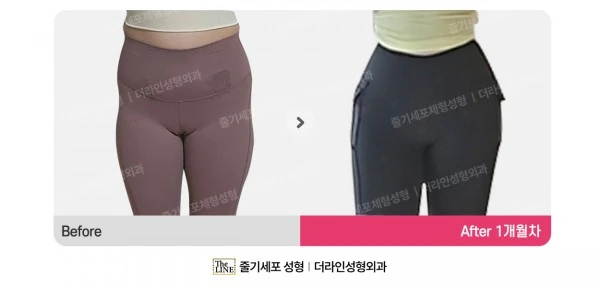
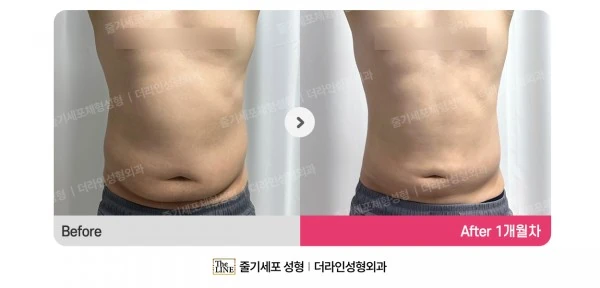
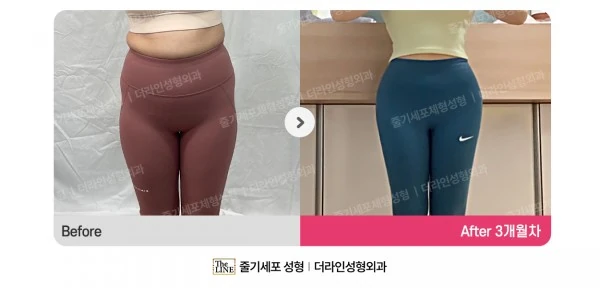
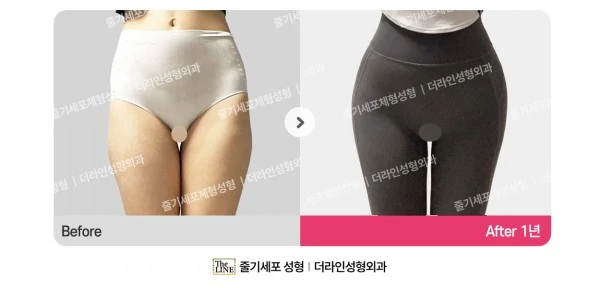
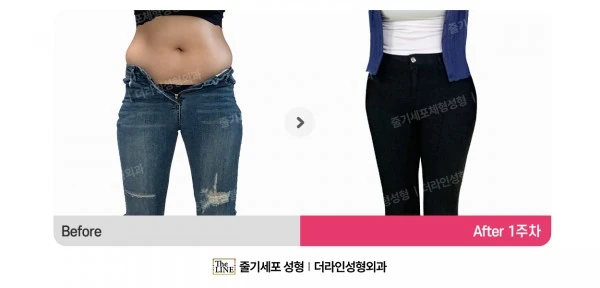
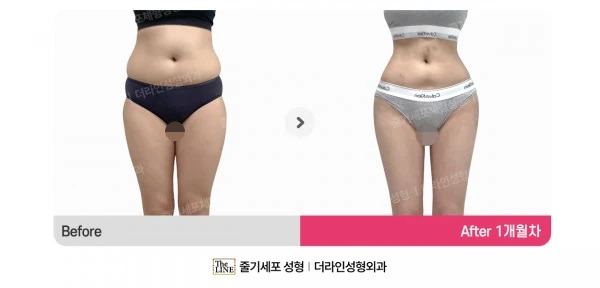
Outcomes differ from person to person, and side effects such as inflammation, bleeding and infection are possible. These are individual patients, not averages.
Love Handle Liposuction in Gangnam: more questions
Yes, and for an isolated roll it is a one to two hour case. We advise including the bra line when the back would otherwise show a step, because the flank result is judged in profile where both regions are visible.
Flank fat is denser and less metabolically active than abdominal fat, and its distribution is largely genetic. That is exactly why it is a good liposuction indication: it responds to removal, not to training.
The signature plan adds hip grafting and saddle work to flank suction and takes about three hours. Patients choose it when the goal is the waist-to-hip shape rather than flank volume alone.
The removed cells do not return, so the flank stays proportionally smaller. Significant weight gain enlarges the fat cells that remain everywhere, including here, so the shape holds best at a stable weight.
Training strengthens the muscle underneath but does not choose where fat leaves your body. Flank fat is dense and largely genetic, which is why it survives the diet that flattened your stomach.
It is not a question any clinic should answer about itself. What is worth comparing is whether the flank is planned together with the abdomen and back, since treating it alone often leaves a step where the untreated region begins.